.jpg)


.png) 1. Growth Is Not a Campaign
1. Growth Is Not a Campaign
Over the past decade, when businesses talk about growth, many immediately think of large-scale advertising campaigns, aggressive promotional programs, or viral marketing initiatives that generate massive attention on social media.
A successful campaign can drive thousands of website visits, generate a significant number of leads, or create a sudden surge in app downloads within a short period of time.
On the surface, the numbers look impressive. Traffic increases. Revenue grows. Brand awareness expands. Everything seems to indicate that the business is moving in the right direction.
However, reality is often more complicated. Once the campaign ends, customer return rates begin to decline. Advertising costs continue to rise. Conversion rates gradually drop. Marketing teams are forced to launch new campaigns repeatedly just to maintain previous results.
This raises an important question: Is the business truly growing, or is it simply creating short-term spikes fueled by marketing budgets?
The truth is that sustainable growth has never been about a single campaign. Real growth comes from a system that consistently creates value for customers, retains them over time, and converts that value into long-term revenue.
A campaign can generate attention. Only systems thinking can generate sustainable growth.
2. What Is Systems Thinking? What Does a Real Growth System Look Like?
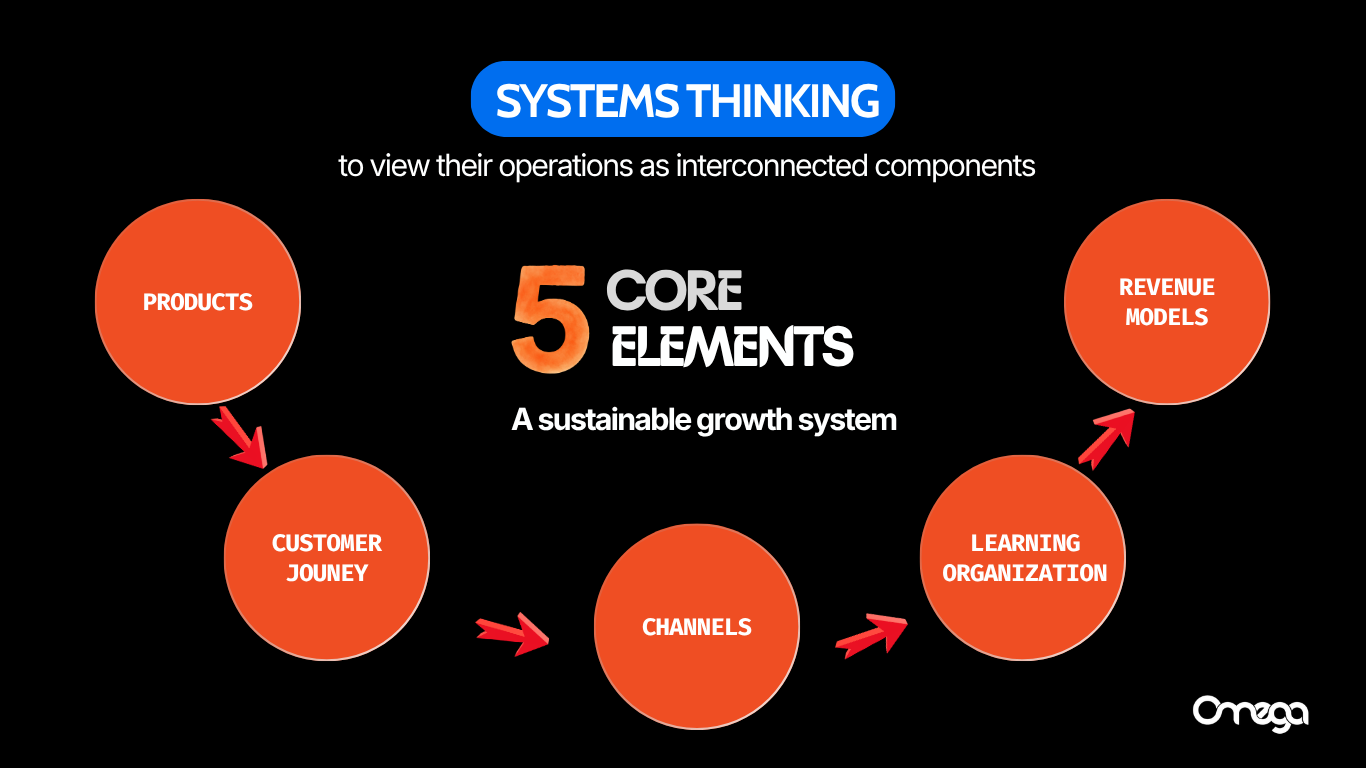
Systems Thinking is an approach that encourages businesses to view their operations as interconnected components rather than isolated departments working independently.
Traditional business thinking often focuses on solving individual problems separately.
If customer acquisition is low, increase advertising spend.
If revenue declines, launch promotions.
If conversion rates drop, change the messaging.
While these actions may address symptoms, they rarely solve the root cause.
Systems thinking pushes organizations to ask a different question:
Instead of asking, “How can we get more customers?”, businesses should ask, “What within our system is preventing customers from staying?”
A sustainable growth system is typically built on five core elements.
- A product that solves a real problem
- A scalable acquisition channel
- A Sustainable Revenue Model
- An Optimized Customer Journey
- A Learning Organization
3. AARRR and Four Fits: Essential Frameworks for Growth
Building a growth system requires more than intuition.
Businesses need frameworks that help them understand customer behavior and evaluate growth opportunities systematically.
3.1. The AARRR Framework
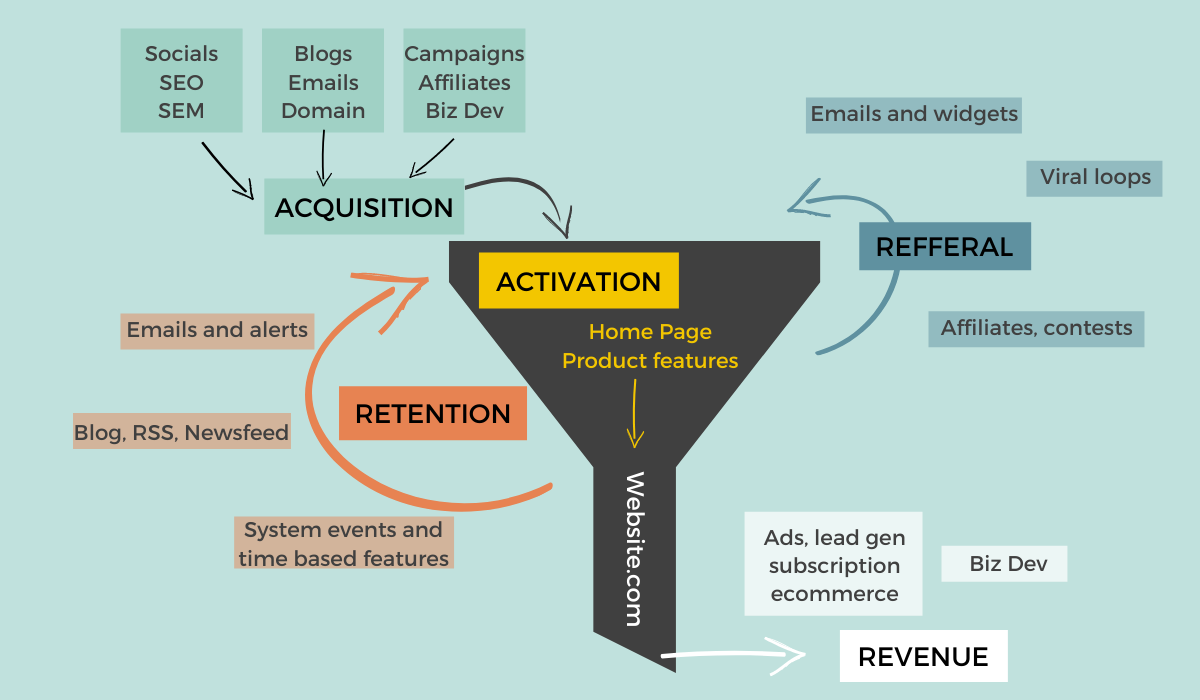
One of the most widely used growth frameworks is AARRR, often referred to as Pirate Metrics.
The framework breaks the customer journey into five stages:
Acquisition: This stage focuses on attracting users through channels such as SEO, paid advertising, social media, partnerships, or referrals.
Activation: The first interaction with a product often determines whether a user stays or leaves.
Retention: Many businesses spend enormous amounts of money acquiring users but struggle because those users never return.
Revenue: Revenue measures whether the value delivered by the business translates into economic outcomes.
Referral: When customers have exceptional experiences, they naturally become advocates. Referral creates one of the most powerful growth engines because customers become part of the acquisition process.
 3.2. Brian Balfour's Four Fits Framework
While AARRR focuses on the customer journey, Brian Balfour's Four Fits framework helps organizations assess their overall readiness for growth.
Product-Market Fit: Does the product solve a real market need?
Channel Fit: Has the business identified a scalable acquisition channel?
Model Fit: Is the business model sustainable?
Growth Fit: Does the organization have the people, processes, and systems required to scale?
4. Customer Touchpoint: The Most Overlooked Growth Lever
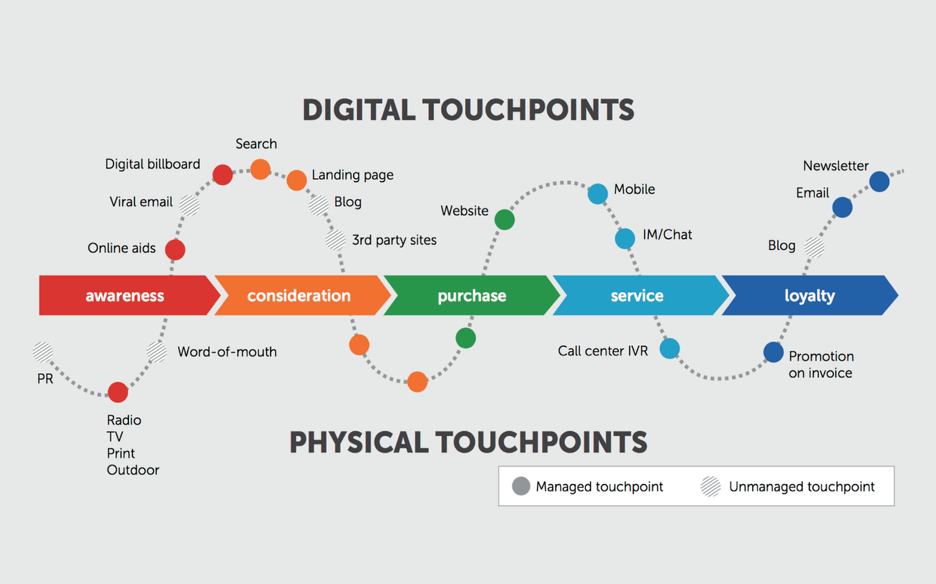
One of the biggest mistakes businesses make is focusing exclusively on marketing activities while ignoring the customer experience across the entire journey.
Customers do not judge a company based on a single advertisement or social media post.
They judge the cumulative experience of every interaction they have with the brand.
A website is a touchpoint. A landing page is a touchpoint.
A registration form is a touchpoint. An onboarding experience is a touchpoint.
Customer support messages are touchpoint. Even the payment process is a touchpoint.
Every touchpoint has the potential to strengthen or damage the customer experience.
In many cases, businesses do not need to increase marketing budgets to achieve growth.
They simply need to optimize existing touchpoint. A simplified registration form can improve conversion rates.
A better onboarding flow can increase activation. A personalized email sequence can improve retention.
A smoother payment experience can increase revenue.
These improvements may not generate the excitement of a viral campaign.
However, when combined, they create a growth system that is far more powerful and sustainable.
 "You don't need a team of ten people to start doing growth. You simply need to start viewing your business as a system rather than a collection of disconnected campaigns."
Conclusion
The companies that achieve sustainable growth are not constantly searching for the next campaign. They focus on understanding customers more deeply. They improve products continuously. They optimize customer experiences relentlessly. And they build systems capable of generating long-term value.
If your business is struggling to maintain growth, it may be time to stop looking at individual campaigns and start looking at the entire organization as an interconnected system.
Contact Omega Media today to evaluate your current growth system and discover new opportunities for sustainable business growth.